


While staying at Melote House in Lapalala Wilderness, we were privileged to be present for a rhino notching and monitoring initiative. An experience that gave us rare insight into what thoughtful, modern conservation looks like on the ground.
This work forms part of Lapalala’s long-term approach to keeping rhinos wild, protected, and living freely in vast open landscapes with their horns intact, as they’re meant to. It’s a process that relies on expert veterinary care, innovative technology, and careful ongoing monitoring.
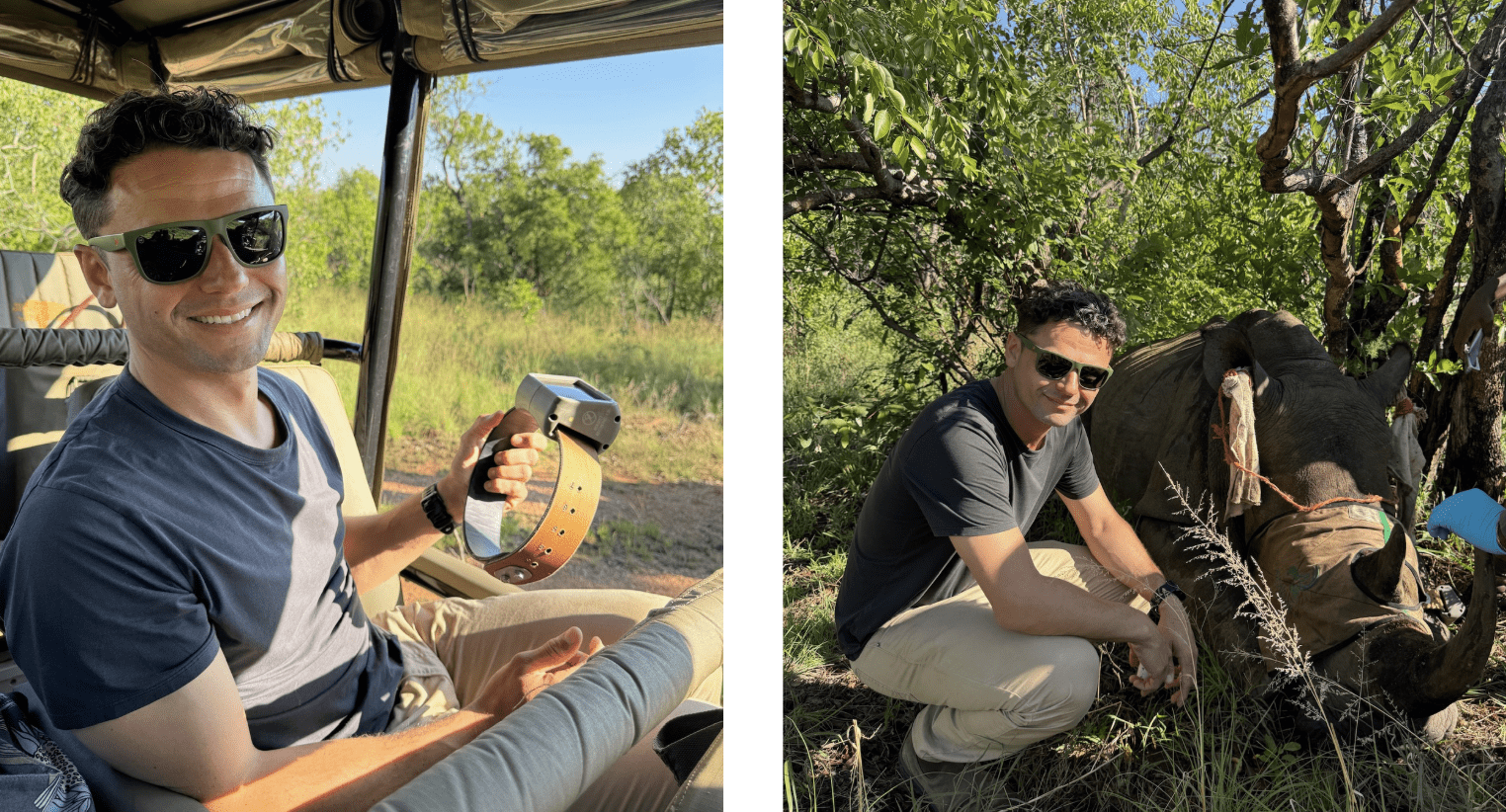
The notching allows conservation teams to identify individual rhinos from a distance, supporting accurate population counts while reducing the need for repeated intervention. We fitted a mother rhino, alongside her calf, with a monitoring bracelet, similar to a wearable device, which tracks location and heart rate. If behaviour falls outside of normal patterns, such as a sudden spike in heart rate, the system alerts the team so they can respond quickly and appropriately.
With a battery life of around 18 months, the device allows for continuous monitoring while letting the rhinos remain undisturbed in the wild for long periods. Over time, this kind of technology helps make conservation efforts both less invasive and more effective.
The entire process was led by experienced wildlife veterinarians, Dr Kelsey and Dr Zoe, whose calm expertise ensured the animals’ safety throughout. Going forward, the data collected allows the team to monitor these rhinos closely and respond to any unusual activity as part of their ongoing protection.
Rhinos have faced huge population declines over the past century, mainly because of poaching driven by demand for their horns, which are illegally traded as status symbols and used in traditional medicine. Black rhino numbers, for example, dropped by about 96% between 1970 and the mid-1990s. But there is hope, conservation efforts have helped some species recover, especially the Southern white rhino, which was brought back from near extinction in the early 1900s, when fewer than 100 animals remained, to a population of many thousands today. Being able to witness this level of care, innovation, and commitment firsthand was incredibly grounding. It was a powerful reminder of just how much dedication goes into safeguarding rhinos for the future, and how essential reserves like Lapalala are to conservation in Africa.

Experiences like this aren’t something that can be guaranteed or planned in advance, as conservation work always takes place according to the needs of the wildlife. For guests with a strong interest in conservation, we do our best to recommend properties that are actively involved in this kind of work and we share those interests with the teams on the ground. When the timing aligns, being able to witness conservation in action is a rare and meaningful privilege.
See our full experience at Melote House.

